Thursday, 14 April 2016

A holistic development of Informal Economy is key to SME growth


By Busa Jeremiah Wenogo

Image result for PAPUA NEW GUINEA SME
In the SME Masterplan 2016-2030 that was recently launched; the Department of Trade, Commerce & Industry (DTCI) expressed its intention to take charge of and develop the informal economy in the country.

This no doubt makes a lot of sense especially when the Department is fully focused on developing the SME Sector in the country. It is hoped that with the proposed arrangement the informal economy can at last gain its fair share of limelight and subsequently, much needed boost. The current government does not seem to be interested in promoting informal economy as a separate agenda until and unless it is relevant to stimulating the growth of the SME Sector. Even under the current arrangement where informal economy is housed under the Department for Community Development & Religion (DFCDR), the policy has gained very little traction. Since its inception, the Department’s top brass has shown little or no interest interms of resource allocation for the sake of its implementation. This has forced the CIMC through its informal economy sectoral committee to parent the policy in the interim until the Department has a change of heart. Even now there are signs that the Department is still not sure what it would want to do with the policy. Perhaps the government is discouraged by this notion that vigorously promoting the informal economy would only lead to stagnation in the SME Sector growth as informal economy participants take advantage of the favourable conditions and remain static in the sector. Certainly researches have shown that informal economy vendors in PNG show little sign of transiting into the SME. This has the tendency to deprive the government from growing its formal private sector and expand its narrow tax base. Yet the reality is that PNG’s informal economy apart from the betelnut trade is not fully developed interms of its scope to be a genuine contributor to the national purse.

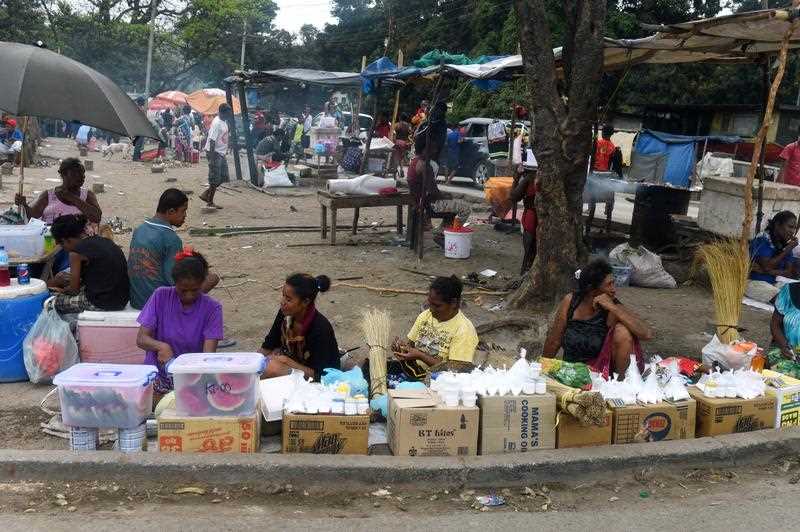
At present there is very little diversification of activities which is causing intense competition. One has to only venture into a nearby market or drive by and observe the stalls set-up along the road to confirm this. PNG’s informal economy is still plagued by basic constraints such as inhospitable government policy and regulations, lack of access to finance, poor financial literacy skills, lack of product development and market identification knowledge to penetrate or develop niche markets just to name a few. By encouraging the growth of the informal economy the government can still raise tax through the Goods and Services Tax given the close inter-dependent relationship between the formal and the informal economy. Unfortunately in PNG while the relationship is visible, policy makers tend to ignore its socio-economic contribution by placing greater emphasis on its contribution to filth in the city. 

Having the Department of Trade, Commerce & Industry coordinate the efforts of both informal economy and SME growth makes a lot of sense especially when one of the biggest challenges for the SME Policy is to create a viable pathway for informal economy to graduate/transit into the SME Sector. It is hoped that this will help the informal economy to ride on the political will and drive provided by the Minister responsible for Trade, Commerce & Industry.  This is almost a de javu where once upon a time the then Minister for Community Development Dame Carol Kidu was the main driver driving policy and legislative reforms to nurture the growth of the informal economy in PNG.

Regardless, informal economy unlike the SME Sector has a large social component that should not be discarded when attempting to work out the appropriate institutional set-up and support. There are large segment of the informal economy that composed of participants who are purely surviving on the income generated through informal economic activities compared to those who are “business minded”.  This group of people relies on the informal economy basically to “get by”. For this people the informal economy is a “safety net” from unemployment and poverty. Also majority of the informal economy participants are women, many of whom are “bread winners” in their family. However, their participation in the sector is hampered by violence, harassment and abuse inflicted on them by thugs and city authorities. This is where the role of the Department for Community Development & Religion as a welfare department becomes crucial. Department of Trade, Commerce & Industry may have the resources and political will at present to take on board the informal economy but they are likely to embrace informal economy strictly from an economic standpoint; which may take the spotlight away from the social issues impacting the sector. This means that if the Department of Trade, Commerce & Industry push on with its plan it will need to accommodate the Department for Community Development & Religion somewhere in the implementation plan of the policy. The DFCDR in its part needs to show a genuine concern and willingness to support the informal economy. If DTCI takes the lead DFCDR should embrace its leadership and work in partnership for the betterment of the 80-85% of Papua New Guineans.

In taking on board the informal economy DTCI must be willing to accept and respect the fact that a larger part of the informal economy may want to remain in the informal economy for a considerable period of time. That means that the Department needs to exercise considerable patience and put in place a realistic target and strategies to cultivate an “entrepreneurial mindset” that is ready to make a difference in the SME sector in its own timing. Too much unnecessary expectation may actually hurt the informal economy and derail DTCI and the government ambitious and noble plan to increase the number of PNG owned SMEs in the country.        


Monday, 14 March 2016

Markets need government ownership


By Busa Jeremiah Wenogo


In considering the options that are available in elevating the government’s attention given to markets it is important to note that since the reform on the provincial and local level government, crucial funding arrangement such as the Town and Urban Service Grants have not been forthcoming from the national government to assist the town and urban authorities to maintain services within their respective towns and urban areas. When these grants have been made available provincial governments have not been reliable in distributing these funds to respective LLGs within the province. Now that these funds are now directly deposited into LLG accounts it is hoped that this will have a direct impact on key services like the development and upkeep of markets at ward level. Yet with the government now reducing the LLGSIP from K500, 000 to K100, 000 this could imply a reduction. Inaddition, misapplication or non-availability of these types of grants has resulted in the deterioration of key facilities like market over the years and with it the entire image of the towns and urban centres. It is even made worse when most local authorities are not utilizing their powers as provided for by the Organic Law on Provincial & Local Level Government to enact laws that can enable them to generate revenues internally like imposing fees on the use of market facilities, mobile trading and land tax. One way of overcoming this difficulty would be for the national government to put in place a specific authority to deal with markets. In that way it will enable the national government to appropriate funds from the budget specifically to be used for renovating existing markets or construction of new markets at the sub-national level. Furthermore, public private partnership should be explored to bring in private sector investment as well as encourage counter-part funding with sub-national level government.

Without clarity regarding the role of provincial governments, towns and LLGs concerning markets and funding support to build and sustain these facilities,markets throughout the country have been greatly neglected by the government for many years. Subsequently, there are only few properly equipped markets built to cater for the needs of both the farmers/vendors and the consumers. In the absence of proper market facilities vendors have resorted to road side markets, peddling, mobile trading and even encroaching on state land for space which has led to regular confrontation between the authorities and the vendors[1].

Nevertheless, the government has recognized the importance of markets in its higher plans such as the Vision 2050[2]. It is also encouraging to note that every now and then we read and hear stories about Members of Parliament spending money to build markets. Most recently, Hon Justin Thatchenko and Powes Parkop have spent money on renovating markets in the city. Gordons Market, which is the biggest market in Port Moresby, is expected to undergo major repair to transform it into a modern market[3]. Other markets such as the Mt Hagen Market have been funded by the generous support of the Australian Government through the Incentive Fund. Yet it is fair to say that a lot of the markets have not been properly managed allowing for petty crimes to thrive and rapid deterioration of its facilities. Furthermore, harassment of various forms has been widely reported to have taken place within the markets making most of the markets unsafe for women to sell their produce. Initiatives like the Safe Cities Market Project of UNWOMEN and NCDC are attempting to change the situation in major markets in the city yet these markets will not maintain its good image for many years to come if appropriate mechanisms are not set-up.

Market is a very important driver of economic growth apart from the lucrative extractive industry that is often accredited for producing record breaking economic growth rate for PNG although, there is very little evidence to suggest that these windfall gains have trickle down to the mass[4]. Infact, the emergence of large scale projects such as the PNG LNG have further increased the divide between the “haves” and the “have nots” and led to significant rise in the cost of living[5]. Markets if prioritized by the government and managed properly could provide that avenue for these gains to be passed onto simple farmers and informal economy (sector) vendors most of whom make up the bulk of the PNG’s population.Typically a market of whatever shape or form provides an avenue for the formal and the informal economy(sector) to interact. Thus building more markets will further enhance the prospects of spreading the income/revenue generated from the large resource project across a wider spectrum of the society and will assist in evening out the huge income disparity gap between the rich and the poor. At the same time markets provide the local authorities the opportunity to generate additional income through imposing fees on the vendors for the use of the facilities. Fees should not be necessarily confined to gate fees but can be broaden to include the use of water and toilet facilities so long as they are provided in the best way possible.

Market is a great platform to linking the informal economy with the SME at the micro-enterprise level. Within markets vendors can be identified and trained on specific areas of needs whether it’s functional or financial literacy or understanding their basic rights as vendors and protecting the interest of their clients. The UNWOMEN/NCDC Safe Cities Market Project[6]in Port Moresby has thus far proven that markets are an effective tool to assist in registering and profiling vendors for the sake of organizing them into groups to build a collective “voice” to address their concerns.

Politicians need to recognize the important role of markets and make provisions in terms of funding in their budget to build and routinely maintain markets (both primary and secondary) to create income earning opportunities to as many people as possible within their constituency. Such funding arrangement such as the DSIP should have a portion of that money specifically allocated to building markets in all districts as was stated in the previous 2011-2015 MTDP[7]. As highlighted above this should be complemented with the government empowering an existing department or agency to be responsible for ensuring that markets are built and routinely maintained throughout the 89 districts. Furthermore, it does not hurt for the national government to explore the idea to introduce a national body/entity to plan for and manage market facilities throughout the country on behalf of the people of this country.Better still it could amend relevant sections in the Organic Law on Provincial & Local Level Government to clearly highlight that building and maintaining markets in the provinces, districts and wards is the role responsibility of the respective sub-national government.This could then be reflected and amplified in the revised Informal Economy Development & Control Act. Whatever approach the government intends to take on board one thing is clear; its challenge will essentially be one of resource and commitment to this endeavour, something that the government has been seriously lacking eversince.


Last published: Weekender, The National Newspaper: Friday, March 4, 2016


[3]EMTV (2015); “Gordons Market to be redeveloped”; http://www.emtv.com.pg/article.aspx?slug=Gordons-Market-To-Be-Redeveloped;
[4] Massey University (2014); “PNG’s paradox of plenty outlined in UN report”; http://www.massey.ac.nz/massey/about-massey/news/article.cfm?mnarticle_uuid=B66733E8-CE19-295B-6262-30E52AF133FE
[7] The REDD Desk (2011); Papua New Guinean Medium Term Development Plan 2011-2015; http://theredddesk.org/countries/plans/papua-new-guinea-medium-term-development-plan-2011-2015

Sunday, 13 March 2016

Who looks after the markets?

By  Busa Jeremiah Wenogo

In PNG the function of establishing and looking after physical markets is said to be the sole responsibility of the sub-national government .i.e. provincial, Local Level Government (LLG) and urban authorities. Yet the Organic Law on the Provincial & Local Level Government does not spell out explicitly that this is the case. Although the law particularly in section 42 and 44 covers elements of the informal economy (sector) such as “mobile trading”, “cottage industries”, “agriculture”, “fisheries”, “betelnuts and any other marketable items”[1], there is nothing specific on whether the powers given to provincial and LLGs under the law cover aspects relating to the function of building and maintaining market facilities. Yet at the national level according to the Department of Provincial & Local Government’s manual on Determination assigning service delivery functions and responsibilities to provincial and local level governments, the Department of Community Development & Religion through its Community Economics Section, is responsible for “declaring market areas” and “arranging gazettal of informal sector inspectors” at the LLG level[2]. Unfortunately in reality that has not been the case in most LLGs. At the sub-national level only the NCDC Act 2001 as per section 41 sub-section 2(m)[3]clearly states that the commission has responsibilities over markets within NCDC.However, this is also problematic given that not all major markets within Port Moresby fall under the auspicious of NCDC. Markets like the Manu-Autoport market in front of the former TST supermarket was established by the TST Company back in the 1980s[4].

Furthermore, being deprived of the powers to issue land titles most provincial governments (including NCDC), urban authorities and LLGs can only plan their towns and rural areas but cannot easily allocate space for building markets on state land[5]. The current centralization process of land tenure system in PNG is very tedious and time consuming. In the current legal environment, land that were planned for building markets could easily be allocated for other developments at the prerogative of the National Department of Lands & Physical Planning. This is made worse by the rampant corruption within the national department of lands and physical planning where state land is acquired by individuals and firms under dubious circumstances[6]. The lack of priority put on markets by various tiers of government means that most of the land is allocated for other developments other than market. From this reality one can deduce that a lot of the markets that are set-up in provinces and LLGs are either built on customary land operating under some sort of social contract between the State and landowners or illegally set-up on private or state land. In a city like Port Moresby where the State is fast running out of land competition is intense in securing the scarce undeveloped state land for development purposes. As a result markets  are increasing being pushed out to the peripheries of towns and cities away from its strategic node areas where there is ample concentration of demand.
The announcement early last year by the Lands Minister that provincial lands boards will be set-up in all provinces throughout PNG is key to ensuring that provinces develop their own plans and coordinate developments[7]. Certainly Provincial city and town Masterplans that are critical to guiding the work of the provincial lands board should make market a priority in every district and ward throughout the country. Market aside from road, airstrip and bridge is the most fundamental public infrastructure that should be present to empower the local community in the rural and urban areas to engage in commercial oriented activities. Such an arrangement mooted by the Minister will greatly assist provincial government, urban and town authorities to tie-in their planning process with land, the most important resource or asset. The Minister should further complement this move with other reforms in the area of customary land with the view to strengthen“collective ownership “and ensuring “shared benefit” among landowners. Furthermore, laws in relation to towns and cities particularly its definition, management and planning should be reviewed for the sole purpose of protecting and nurturing their growth. This exercise should at the very least include market as one of the important minimum standards when planning towns and cities.Perhaps from the outset the government should make use of the opportunity provided in the review of the Informal Sector Development & Control Act 2004 to spell out clearly whose role it is when it comes to building and managing market facilities. Although the CLRC draft report on the review of the Informal Sector Development Control Act 2004 has already identified this need. The review report could initiate the process by creating/inserting a provision in the revised law to spell out clearly that the administering authorities of the law in the likes of NCDC, provincial governments, urban and town authorities and LLGs be responsible for the management and upkeep of the market facilities. Going beyond that it could also propose for a national government department to take carriage of looking after market facilities in PNG or create a separate entity empowered with its own powers to build, maintain and manage market facilities throughout the country.

Last Published: Weekender: The National Newspaper: Friday, February 26, 2016, pg 55


[1]Organic law on Provincial Governments & Local level Governments (1998); pg 24 & 26; http://www.ago.gov.pg/images/downloads/Organic%20Law%20on%20Provincial%20Governments%20and%20Local-level%20Governments.pdf,
[2]Department of Provincial & Local Government Affairs (2009); The Determination assigning service delivery functions and responsibilities to provincial and local level government; pg 8
[3]National Capital District Commission Act 2001, pg 25; http://www.paclii.org/pg/legis/consol_act/ncdca2001367.rtf.
[5]National Research Institute; “Fairfax Harbour – An iconic harbor of significance” (2014); http://www.nri.org.pg/index.php/22-news/179-fairfax-harbour-an-iconic-harbour-of-significanc?showall=1&limitstart=
[7]Department of Lands & Physical Planning; Land Tok (2015); pg 10; http://lands.gov.pg/News/LandTok/LandTok_012015.pdf

Tuesday, 8 December 2015

Getting PNG’s informal economy right

By Busa Jeremiah Wenogo


On 19 October 2015 the Constitutional Law Reform Commission launched the draft report on the Review of the Informal Sector Development and Control (ISDC) Act of 2004 at the University of Papua New Guinea (PNG). The report contains a set of recommendations and a proposed bill to replace ISDC Act to be presented to the government for its consideration later in 2015. If passed, the proposed bill could transform PNG’s socio-economic landscape.
Street vendors are seen near the stilted village of Hanuabada near Port Moresby, Papua New Guinea, 12 Sep 2015. (Photo: AAP).
The report called for wide-ranging reforms in the areas of financial inclusion, research, policy and government’s functions, as well as budget reforms to better equip local level governments (LLGs) to administer the Act. If, as the report recommends, the informal economy is recognised as a ‘wealth distributive mechanism’ it could allow money generated in big impact projects, such as the PNG liquefied natural gas (LNG) project, to be transferred to the majority of the populous. And, if provided with the right environment, it could promote entrepreneurism and innovation.
Yet will the government ensure that the bright intentions of the law are realised? The sad reality is that implementation and enforcement have always been achallenge for the PNG government. Most LLGs in PNG are struggling to function effectively due to a lack of resources as well as a limited understanding of their functions and responsibilities. Since the reduction of the Service Improvement Grants for LLGs from K500,000 (about US$168,750) in the 2013–2014 budget to only K100,000 (about US$33,750) in 2015 budget, the ability of LLGs to deliver services has been severely handicapped. The situation is likely to remain the same or further deteriorate for the near future. To make matters worse, as referenced in the report, most LLGs that were consulted had no idea about the existence of the 2004 Act even though it was a national law.
The report also found that at the national level there was a lack of oversight, which enabled local administering authorities to make laws that did not align with the Informal Sector Development and Control Act 2004. This has led to some local laws beings contested in the courts.
To address this, the Department of Community Development and Religion has indicated it will dedicate a new section to coordinating the implementation of the policy and the law. Yet this may not yield any tangible results. The department itself is still reeling from a leadership tussle two years ago that has seen the department fragment into factions. In the aftermath of this battle most offices are still half-empty. And the Department has not shown any enthusiasm towards implementing the National Informal Economy Policy. In this environment there is no guarantee that the law will be implemented once it is passed.
Given that, within the informal economy, there are diverse sets of activities (some of which pose serious health and safety risks) the revised law must adequately control the growth of the informal economy to minimise its harmful effects. The informal economy law in its current form is consistent with this sentiment but has insufficient controls. The report recommends reinforcing this idea by raising penalties for informal economic businesses that negatively impact the environment, hygiene, health and safety as well as for those that sell addictive substances.
But the report fell short of proposing a mechanism to protect the rights of informal economy participants. There is no mention of the need to ‘properly organise’ informal economy participants, and their activities, to assist dialogue and consultation. Section 3(1) of the Informal Sector Development and Control Act 2004 allows the administering authority to consult with relevant ward committees, police and government agencies when declaring areas in which informal economy businesses could be conducted.
But there has been little consultation so far. This has been compounded by the fact that informal economy operators and vendors are disorganised. Given the complexity of the informal economy, provinces need to develop informal economy committees comprised of key stakeholders to deal with these issues.
The report also did not highlight the need for a proper restorative justice mechanism to be in place to deal with cases of harassment and abuse inflicted by enforcers on informal economy participants. The current Informal Sector Law is silent on this matter.
For most informal economy operators the Village Court is the most affordable, reliable and dependable arm of the justice system since it addresses individual and community legal concerns. As most vendors lack basic literacy skills and resources it can be difficult for them to navigate the formal legal system. Developing an informal economy market vendor association that represents their common interests could greatly assist such individuals. Such a grouping should also include those who are operating outside of formally recognised markets such as street vendors, peddlers and mobile traders. An interest group like this could better appeal to administering authorities and policymakers.
The report could also pose some problems for participants in the informal economy. Increasing penalty fees and repealing section 18 of the current Act — which excluded informal economy participants from certain regulations — will force participants to comply with standards that maybe regarded as too high. This is especially true for the many participants that have very poor literacy skills and lack formal employment to supplement their inconsistent, meagre incomes. While the intention of the report is to put forth a progressive vision for PNG’s urban centres, this should not come at the expense of people’s livelihoods.
About 80–85 per cent of PNG’s population engages in the informal economy in some form. Therefore it is vital that the government gets the law right. If it does, it may well be a game changer for PNG.
Busa Jeremiah Wenogo is an economist working with the Consultative Implementation and Monitoring Council (CIMC) in Port Moresby.
Via The East Asia Forum http://www.eastasiaforum.org/2015/12/05/getting-pngs-informal-economy-right/?utm_campaign=shareaholic&utm_medium=facebook&utm_source=socialnetwork

Wednesday, 11 November 2015

New law on the informal economy could be a game changer for PNG (Part two)

By Busa Jeremiah Wenogo - Pacific Institute of Public Policy 


On October 19, 2015 the Constitutional Law Reform Commission launched the draft report on the Review of the Informal Sector Development & Control Act 2004 at the University of Papua New Guinea. The report contains a set of recommendations and the proposed bill that would be presented to the government for its consideration and endorsement sometime around November. If passed the bill may well be the game changer to transform PNG’s socio-economic landscape. Particularly if the informal economy is seen as a wealth distributive mechanism, it could allow money generated in big impact projects such as the PNG LNG, to be transferred to the majority of the population who are its beneficiaries.
The first part of this blog was published last week. The following is part two:
However, the report fell short of proposing a mechanism to protect the rights of the informal economy participants. Subsequently, there is no mention of the need to properly organize informal economy participants and their activities into groups for the purpose of dialogue and consultation. Section 3(1) of the Informal Sector Development & Control Act 2004 provides for the administering authority to consult (if they wish to) with relevant ward committees, the police force and relevant government agencies responsible for health, physical planning and building, when declaring areas on which informal economy businesses could be conducted. However, experiences thus far have indicated that this has not been the case.
Even if this exists in some provinces there is little evidence to suggest that the administering authorities sought views from informal economy operators or vendors because informal economy, both its activities and operators, are disorganised. Furthermore, given the complexity and cross-cutting nature of the informal economy, provinces need to have special informal economy committees comprising of key stakeholders to deal with these issues. For instance, border provinces such as Vanimo see massive influx of cheap Indonesian goods into Vanimo town and the villages along the highway leading to Batas. These imported goods (with questionable content and quality) make up a large portion of the informal economy in Vanimo and the neighbouring villages. To protect consumers and ensure fair play, the provincial government or the Vanimo Town Authority will have to work with the Border Development Authority, customs, police, NAQIA and others. Therefore, the absence of such a mechanism will do little to change the status quo of the situation.
while the intention is to put forth a progressive and rosy image of the city and urban areas, this should not come at the expense of people’s livelihoods
The report also did not highlight the need for a proper restorative justice mechanism to be in place to deal with cases of harassment and abuse inflicted by enforcers on informal economy participants. The Informal Sector law in its current form is silent on this matter. Section 3(6) of the law only goes as far as saying that “an operator (informal economy vendor/participant) aggrieved by the decision of the Administering Authority under section (4) and (5) may appeal to the District Court”. Yet for most informal economy operators or vendors the Village Court is the most affordable, reliable, reachable and dependable arm of the justice system since it addresses individual and community’s legal concerns through a typically PNG way. The District Courts can be utilized by an interest group or an entity representing the interest of informal economy vendors/operators. Therefore, the report fails to recognize that the infringements done by the informal economy participants (apart from the sale of drugs, counterfeit products and homebrew) are ‘economic crimes’ and not criminal offences that would require the ‘heavy arm of the law’. Thus section 4(2) of the Informal Sector law should be reworded or amended to ensure that the members of the police force are excluded from being appointed as inspectors to police the informal economy.
The NCDC buai ban law demonstrated that administering authorities armed with additional powers can abuse it and in the absence of a voice and an appropriate restorative justice mechanism for the informal economy participants, the informal economy will be suppressed to a point where lives could be lost. Deaths relating to the buai ban have been well-documented in the media. Such actions would thereby defeat the whole purpose of the law. In saying that the law does provide sufficient space as captured under section 3, where the administering authority is required to “adequately notify and welcome feedback from the informal economy operators of its attempt to make changes/determination to the law”. The operator(s) on their part should respond within a set time frame or take the matter to the district court if not satisfied with the authority’s feedback. In addition, inspectors appointed by the administering authority as per section 5(2) should properly notify the informal economy operator/vendor of its decision or actions. However as alluded to earlier, with most of the operators/vendors lacking basic literacy skills and resources (funds) they would need someone to do this for them, or better still an entity like an informal economy market vendor association to represent their common interests and amplify their concerns in order to get the attention of the authorities or policy makers.
Increasing penalty fees and repealing section 18 of the Act, which has a list of laws and their clauses that were excluded, means that informal economy participants will be forced to comply with standards that may be too high for them, especially when most of these participants have very poor literacy skills and lack formal employment to supplement their meager incomes. While the intention is to put forth a progressive and rosy image of the city and urban areas, this should not come at the expense of people’s livelihoods. PNG is now a country that is already experiencing a widening gap between the rich and the poor amidst its most prosperous period in its 40 years of nationhood. Early indications are that the PNG LNG will not be as transformative as it was predicted to be. On the contrary, the emergence of the PNG LNG project has created more problems than solutions for this nation. The cost of basic household goods and services have dramatically increased while the government is being forced to make deals that could possibly cost this country a great deal. At a difficult time when this nation is heading into uncharted waters, the wisest thing to do for the PNG government is to lean on its strengths. The informal economy with almost 80-85% of its population engaged in myriad of activities is its strength. Through the good and bad times, it has helped this nation to ride out crisis after crisis. Giving it its long overdue consideration in the national agenda may well be a game changer for PNG.
Via http://pacificpolicy.org/2015/11/new-law-on-the-informal-economy-could-be-a-game-changer-for-png-part-two/

Sunday, 8 November 2015

New law on the informal economy could be a game changer for PNG

By Busa Jeremiah Wenogo - Pacific Institute of Public Policy 


In the first of a two-part blog, Busa Jeremiah Wenogo analyses the review of the Informal Sector Development & Control Act 2004, providing insight into how PNG is undertaking reform of its informal economy. Documenting PNG’s case will hopefully provide policy makers in other parts of the Pacific with ideas on how to best grow their informal sectors.
On October 19, 2015 the Constitutional Law Reform Commission launched the draft report on the Review of the Informal Sector Development & Control Act 2004 at the University of Papua New Guinea. The report contains a set of recommendations and the proposed bill that would be presented to the government for its consideration and endorsement sometime around November. If passed the bill may well be the game changer to transform PNG’s socio-economic landscape. Particularly if the informal economy is seen as a wealth distributive mechanism, it could allow money generated in big impact projects such as the PNG LNG, to be transferred to the majority of the population who are its beneficiaries.
Furthermore, if provided with the right environment, it could unleash entrepreneurialism and innovation that is abundant among many Papua New Guineans but lethargic due to lack of support. One should only take a bus ride to the infamous Gordon Market or travel up into the Kakaruk (chicken) Market in Goroka or elsewhere to witness the vibe of energy and salesmanship at play. This is what the law aims to nurture but in compliance with appropriate minimum standards to protect consumer welfare and generally minimize its negativity.
Yet the challenge will once again fall on the shoulders of the government to ensure that the intention of the law is realized. Already the government is urged in the report to step up and provide leadership in administering the law as well as providing essential public goods and services to encourage the development of the informal economy in PNG. So far the government has failed miserably in this area although it has introduced a policy and a law to address issues affecting the informal economy. This reinforces the sad reality that implementation and enforcement have always been a challenge for the PNG Government. Most Local Level Governments are struggling to function effectively in most areas of the country due to lack of support both in terms of resources and limited understanding of their functions and responsibilities. The report alluded to the fact that most LLGs that were consulted had no idea about the existence of the law although it is a national law.
By allowing provinces to have the freedom to make necessary amendments to the modal law to suit their unique situation, it is hoped that they will effectively control negative aspects and promote the positive side of their informal economy.
At the national agency level the report found that no oversight was provided making way for administering authorities to make laws without alignment to the Informal Sector Development & Control Act 2004. In most cases administering authorities simply turned a blind eye on the law. For instance, in 2012 the courts making reference to theInformal Sector Development & Control Act 2004 restrained the Lae City Council from implementing its decision to close down informal markets in the city. In the case of National Capital District Commission (NCDC), buai producers and political leaders in Central Province issued threats challenging the legality of the buai ban law although this has not come to pass. If the ban was contested in the courts with reference made to the Informal Sector Development & Control Act 2004, the outcome could have changed the dynamics of the informal economy in PNG.
This is where the Constitutional Law Reform Commission’s (CLRC) foresight in introducing a ‘modal law’ is important as it bypasses the difficulties that could have eventuated if a national law superimposes itself with no regard to the administrative set up of certain provinces like NCDC. By allowing provinces to have the freedom to make necessary amendments to the modal law to suit their unique situation, it is hoped that they will effectively control negative aspects and promote the positive side of their informal economy. By having the Department of Community Development & Religion as the lead agency providing oversight on the law, it is envisaged that the amendments will be made with due respect to the spirit/intention of the national law as well as in alignment with the national informal economy policy.
The department to its credit has already embarked on a restructure (with no progress as yet) that will see a new section dedicated to coordinating the implementation of the policy and the law. Yet questions are being asked if this arrangement will yield any tangible results. The department itself is still reeling from the leadership tussle which transpired two years ago which has seen the department fragmented into factions as staff took sides. The aftermath of this battle can still be seen today with most of its offices half empty and manned by only few dedicated officers. In this environment there is no guarantee that the law will hit the ground running once it is passed by the government. This is where the department with the aid of CLRC should explore options that will lead to the effective implementation and administration of the policy and the law. One option would be for the department to quickly work towards establishing a stand alone mechanism, like an office within its structure. Such a set up, apart from speeding things up, would allow the department to effectively reach out (going beyond its traditional role as a social welfare department) to other stakeholders whose mandate or policies are related to aspects of the informal economy policy and Act.
On the other hand the informal economy participants for their part, misunderstood the law the first time it was passed by parliament, subsequently giving rise to the proliferation of diverse sets of informal economic activities, some of which posed serious health and safety risks. This meant that balance needed to be found in the law to ensure that the growth of the informal economy is controlled to minimize its harmful effects. The informal sector law in its current form in fact advocates for this. This is contrary to the views that it ‘gave fire’ to the widespread chaos that is unfortunately the hallmark of PNG’s informal economy. The draft report to the credit of the CLRC, has reinforced this idea with penalties raised depending on the severity of the offence, which is determined by taking into consideration an informal economic business activity’s impact on the environment, hygiene, health, safety and the nature of the items sold such as whether it is addictive and other factors. Furthermore, it has inserted a provision to deal with betelnut-related issues which now imposes a much tougher penalty for irresponsible chewers.
Via http://pacificpolicy.org/2015/11/new-law-on-the-informal-economy-could-be-a-game-changer-for-png/

Sunday, 1 November 2015

Settlement upgrading should include people of different ethnicity


BUSA JEREMIAH WENOGO
THE recent spate of ethnic tensions and fights that have swept certain parts of Port Moresby’s settlements, most notably Hohola, 8 Mile and 6 Mile, have brought to light the need to police the movement of people in and out of towns and cities.
This is important to maintain law and order and protect human lives and public property.
In Papua New Guinea, discussion on rural-urban drift often raises the issue of the Vagrancy Act. While there is a definite and serious need for the government and city and town authorities to look into ways of controlling the movement of people, the Vagrancy Act will have to be a measure of last resort.
This is due to the fact that most urban dwellers are second or third generation migrants (especially from Gulf and Central provinces in the case of Port Moresby) who live, work and do business in towns and cities.
Such an exercise would have a devastating social and economic impact on our towns and cities. Furthermore, the implementation of such a law would not be in the interests of national unity as it would only lead to bigotry and animosity among Papua New Guineans and add fuel to any lingering feelings of regionalism.
The National Capital District, under the leadership of Governor Powes Parkop, seems to have moved away from the vagrancy idea preferring instead to upgrade squatter settlements.
In the corner of Erima settlement where I live, a section of the road leading to my house has been expanded and sealed. This project, which I presume is part of an NCD settlement upgrading exercise, has changed the image of the place by portraying to the public a more progressive outlook.
In addition, a couple of months ago, the electorate’s MP reconnected water into the settlement after several years of struggle. And earlier this month, Labi Amaiu MP commissioned the Erima water project, making it known to the community that he plans to issue formal land titles to settlers and build a proper sewage system into the settlement.
Erima is like the pocket of Port Moresby, hidden away from traffic jams and the hustle and bustle of the city.
While its isolation has provided refuge to its more than 1,000 residents, to those living outside Erima is seen as a hotbed of criminal activity. Furthermore, like other settlements, it has suffered from years of ethnic tensions and fighting.
Other settlements at Morata, 8 Mile and 9 Mile are reported to be undergoing a similar transformation to that we are witnessing in Erima. Yet most of these settlers lack formal employment and resort to the informal economy, mainly plying betel nut to sustain their needs.
The betel nut trade is worth millions of kina and is the most successful agricultural commodity with a huge domestic market.
The lucrative nature of the trade has seen the city commission’s betel nut ban constantly face stiff opposition from producers, distributors, sellers and consumers alike.
Even enforcers of the ban have been reported to have smuggled bags of betel nut into the city to take advantage of the price hike.
With the commission recently doubling its effort to enforce the betel nut ban and with no proper betel nut market in the city, vendors are becoming ever more territorial, fighting for space in an already crowded environment.
From this perspective it is easy to see how a petty issue involving vendors tussling over betel nut (buai), lime (kambang) or mustard (daka) can quickly escalate into an ethnic fight. 
People tell me that the Hohola and 8 Mile ethnic fights were a direct result of disagreements between vendors of betel nut and mustard.
A couple of weeks prior to this, the temporary Erima betel nut market at the old Hugo Sawmill reported an incident involving men from the Eastern Highlands and Tari.
It does look as if betel nut related fights are on the rise.
Unfortunately most of them fights have proven fatal, with participants either critically wounded or killed.
The situation has been made worse by the commission’s decision to clamp down on all informal economic activities in the city, which has made it almost impossible for vendors to switch to non-buaiactivities.
I have seen the devastation of these actions on families who literally survive on them for their daily needs.
Where I live, families are going without food for days. As a result most are now opting to sell betel nuts as a means to sustain themselves. Subsequently, the number of betel nut vendors in Port Moresby is steadily increasing.
Youths from these households have no choice but are forced to go onto the streets doing whatever they can to survive. This has led to an increase in petty crime such as pickpocketing, harassment, hold ups and carjacking.
This indicates the dire need for the government to quickly come up with measures to ease the pressure before it gets out of hand.
Settlement upgrading is one strategy that may address some of these issues, however it will not do much if it advocates creating settlements for each ethnic group.
Settlement upgrading must entail the integration of different ethnicities. Settlements in cities like Port Moresby, Lae, Mt Hagen, Goroka, Kokopo and elsewhere should have a mixture of people from all over Papua New Guinea living together.
An integrated and diversified community ensures that transparency and accountability is maintained when it comes to community policing with leaders chosen on merit and decisions based on law rather than ethnicity.
Secondly, such a multi-ethnical community ensures that flare-ups or fights are quickly neutralised unlike a settlement comprising people of homogenous ethnicity where disputes quickly snowball into an all-out ethnic fighting.
I have seen in my community how suspicions of sorcery and jealousy have held back a lot of the folks from venturing into small business for fear of losing their own or their families’ lives.
Highly educated people do all they can to appease whoever they suspect may be capable of taking their lives (sometimes their own family members) through black magic.
In a big city like Port Moresby and Lae people must learn to live in peace and harmony with their fellow citizens because these are fundamental for nation building and development.
Squatter settlements which house the bulk of urban dwellers should take the lead in this endeavor.
This means that any attempt by relevant authorities to upgrade squatter settlements should focus on creating an integrated and diversified community rather than a homogenous community of a single ethnicity.

Via: http://asopa.typepad.com/asopa_people/2015/10/settlement-upgrading-should-include-people-of-different-ethnicity.html